Hours M-F 9-4. CALL/EMAIL a day ahead.
Welcome Visitors!
We're happy to welcome visitors during the weekdays. Sometimes it's a litttle wet with dripping water in the mornings so if you'd like to visit when it's tropical but not raining then we recommend afternoon visits. Please check our tours tab above to schedule a tour or review our tour calendar to avoid visiting during guided tours for classes or other organized groups. Self guided visits are free and there's also the outdoor areas to the west (succulent and desert plants) and to the east (assorted subtropical and temperate plants along with American pitcher plants and other Carnivorous plants).
Learning in the Conservatory
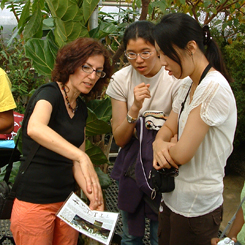
Every year over four thousand students, from UC Davis, Northern California schools and community colleges, and abroad visit the Conservatory to learn and about plant-animal interractions and the adaptations that help plants adapt to deserts and rainforestes, nutrient poor soils, and how the plants interract with herbivores, pollinators and other insects.

International students from China explore the Conservatory July, 2019.
Home of theTitans
Become a friend of the UCD Titan Arums on Facebook!
Photos are posted on our Facebook page, see below, so you can see some of the progress of the "flowers" various stages including senescense (determined and programmed cellular deterioration).
In case you're wondering, drop in visits are free. See our maps page link above for directions and parking suggestions and the side bar for our public hours.
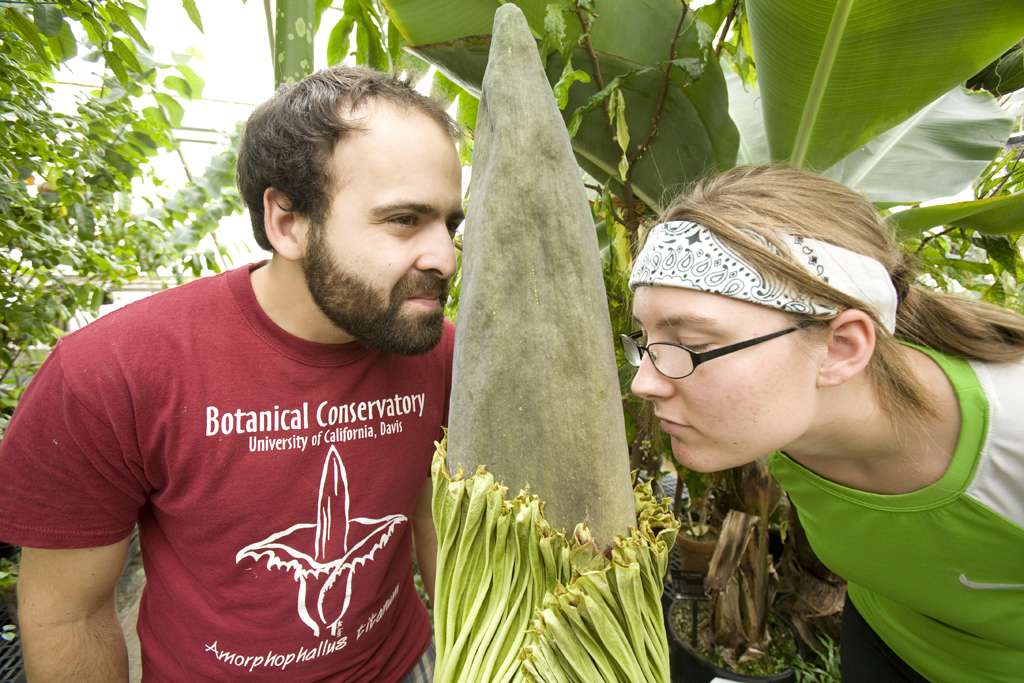
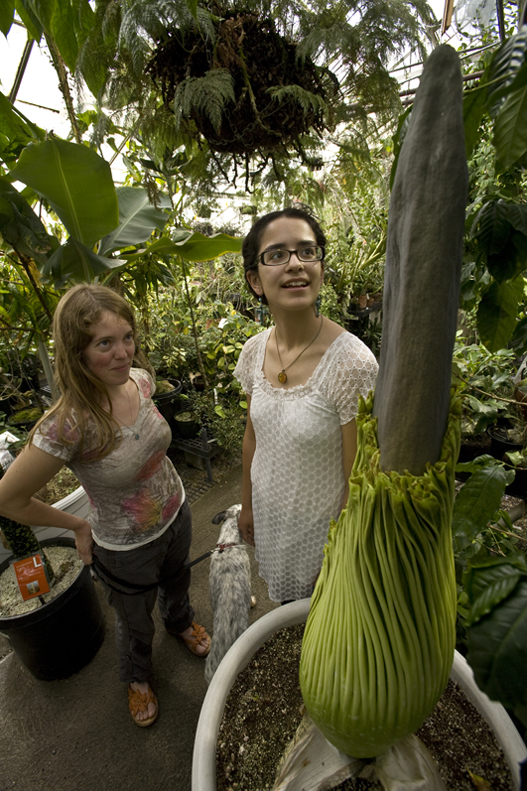
Stay tuned by liking our Titan Arums page on Facebook!
Want to see some pictures from previous years blooms of the Titan Arums here at UC Davis?
Go to collection of Titan Blooms and more!
Click here to see plant pictures from in and around the UC Davis Botanical Conservatory!
We had two Titan blooms in 2009 about a week apart in Mid May
SEE THE PHOTOS OF TED who bloomed on May 4, 2009
Almost a week after Ted bloomed, a new titan dubbed "Phyllis" bloomed for the very first time. Phyllis is the offspring (via vegetative propagule) of Tabatha, which died in 2004.
SEE THE PHOTOS OF PHYLLIS
Amorphophallus titanum
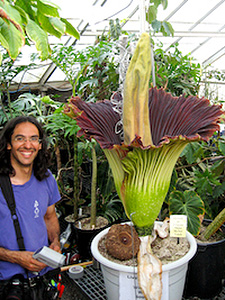 Amorphophallus titanum, or the titan arum, was discovered by the Italian botanist
Odoardo Beccari in 1878 on the island of Sumatra in Indonesia.
A specimen was shipped to the Royal Botanical Gardens in
England, where the plant was displayed and bloomed for the
first time in cultivation in 1889. It may take 15 years for the
titan arum to become large enough to bloom, and it is especially
rare to see in cultivation. These floral giants have been coaxed
into flower only about 100 times around the world, including
7 times here at the UC Davis Botanical Conservatory as of June 2011.
Amorphophallus titanum, or the titan arum, was discovered by the Italian botanist
Odoardo Beccari in 1878 on the island of Sumatra in Indonesia.
A specimen was shipped to the Royal Botanical Gardens in
England, where the plant was displayed and bloomed for the
first time in cultivation in 1889. It may take 15 years for the
titan arum to become large enough to bloom, and it is especially
rare to see in cultivation. These floral giants have been coaxed
into flower only about 100 times around the world, including
7 times here at the UC Davis Botanical Conservatory as of June 2011.
It's not a flower — it's a flower holder!
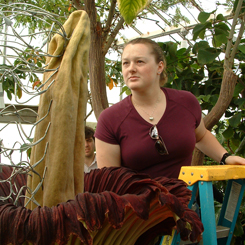
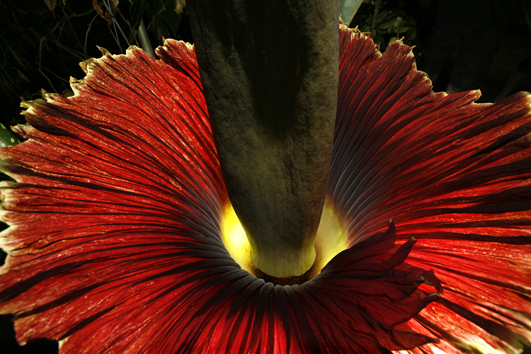
The frilly “petal” of the titan arum is a funnel-shaped leaf called a spathe. The spike that comes up from the center of the spathe is known as a spadix. This spadix produces several hundred tiny flowers, both male and female, way down near the narrow base where it joins the spathe. For the first several hours after the spathe opens up, the spadix puts out the strong scent of a dead animal that attracts flies and carrion beetles for pollination. This is the time when the female flowers are ready to receive pollen. The following day, the odor starts to fade as the female flowers become less receptive, and the male flowers begin to ripen with pollen. This difference in timing between the two types of flowers helps prevent self-pollination, and promotes cross pollination with other titan arums. Flowering of the plant generally occurs every other year, alternating with the production of a single gigantic leaf.
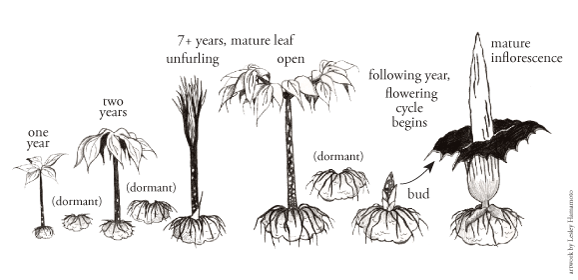
life stages of Amorphophallus titanum
History of the Titans at UC Davis
1995 — A donation of Amorphophallus titanum seed is received
2003 — “Ted the Titan” blooms for the first time
2004 — “Tabatha the Titan” blooms
2005 — “Ted the Titan” blooms for the second time
(exhibited at the Conservatory of Flowers in San Francisco)
2007 — “Ted the Titan” blooms for the third time
2009 — “Ted the Titan” blooms for the fourth time!
2009 — “Phyllis” blooms for the first time! (Clone of Tabatha)
2011 — "Ted the Titan" blooms for the fifth time
2012 — "Tammy the Titan" blooms for the first time early June